|
by Rose Rohloff
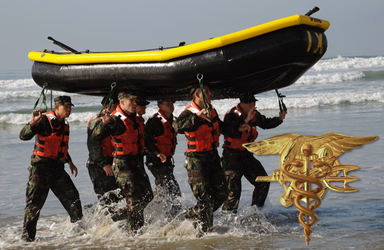
As a 35-year healthcare veteran, I am a firm believer of cross-pollinating successful processes from other industries into the healthcare industry, for positive transformation. Delivering quality care will continue to be complex and challenging, with the need to leverage solutions that work. And SEAL teams are a proven efficient and effective success in the military. By rebranding PC teams and the team process, expanding with additional SEAL successful methods and approaches, we can create the Healthcare version of SEALs (sea, air, land), as APAC Teams (acute, post-acute, and community) - expanding the process to operate in every environment versus only in facilities, for enhancing the quality of care of high risk patients versus limiting to end-of-life cases. The following chart displays characteristics of SEALs, obtained from several former SEAL, special operation personnel, and military officers; with several of the attributes emulating characteristics regarding the successful palliative care (PC) team process.
* https://www.navy.com/dam/Navy/Navy-IMG/Downloads/pdf/enlisted/seal-brochure.pdf ** http://www.nsonswmentor.com/Navy-SEAL.html Within the industry, PC is still aligned or mistaken with hospice, as demonstrated in the following two scenarios. Recently, a viral video was circulated and applauded, Australian paramedics fulfill dying woman’s wish to go to the beach, telling the story of a Hervey Bay crew transporting a patient to the palliative care unit, but she wished she could, “Just be at the beach” instead, and so the crew drove to the beach to provide her peace, based on her wishes of quality of life. This story is lovely regarding true care of a patient. Additionally, in April of this year I attended the Becker’s Hospital Conference in Chicago with the top leaders in healthcare, with a wonderful presentation about business analytics regarding palliative care, end-of-life. Both stories demonstrate clearly that palliative care is still being confused with hospice, or limited to a specific unit definition, instead of the effective use of the team process use with complex and/or chronic conditions.
However, what is it continuing to do to their brains having more medications and anesthesia, while it may not be improving their actual quality of life?” With APAC team coverage, a non-end-of-life case can be reviewed with a sound plan of care based on the desired quality of life for the patient and family. The PC coverage in the community has been focused on cancer patients, with a high focus on children. With the demonstrated cost savings and positive outcomes with The value of palliative care teams (HFMA, March 2013), the community coverage can be successful for individuals with multiple comorbidities, such as diabetes with congestion heart failure and hypertension; as well as elderly who are being targeted when ‘sundowning’ with fraud scams, or confused with medication regime, and those with family living in other states who are their primary support system/durable power of attorney. It is daunting, emotionally and financially, for the families of high-risk consumers to search out the various interdisciplinary resources such as dieticians, social workers, case managers, pharmacists, nurse practitioners, and spiritual counselors. APAC teams would also address the necessary information gathering for determining the real issues of consumers, for example, who needs dietary changes or removal of drugs with side effects before being prescribed new medications by physicians, causing even more side effects or noncompliance, and self medicating or opiate abuse. PC teams can be expanded to APAC teams utilizing the successful palliative care process across the care and health continuum, eliminating the end-of-life association, and differentiating from the terminally ill care of hospice. Just as SEALs operate in every environment (air, sea and land), APAC teams can be an extension of PC teams to be the quick, nimble action teams in all settings, especially the community, for patients with complex and chronic conditions. 
1 Comment
|